
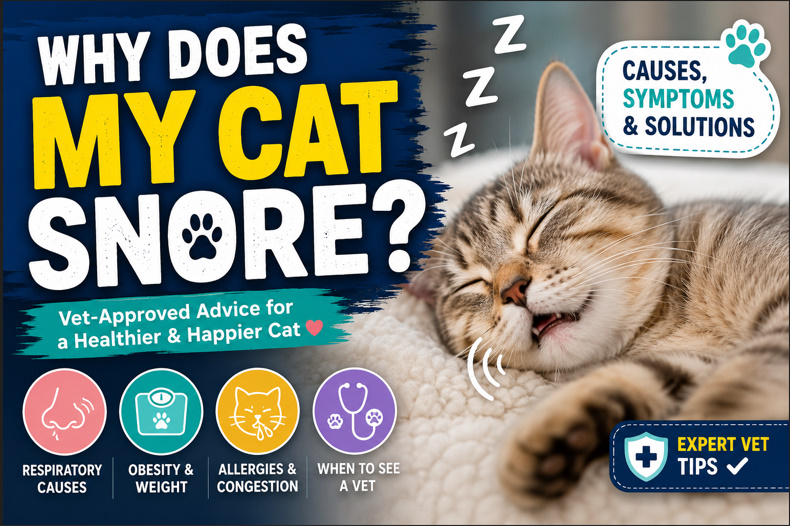
Have you ever wondered, “Why does my cat snore?” While gentle snoring is often harmless, it can sometimes indicate allergies, obesity, nasal congestion, or respiratory problems. In this guide, you’ll discover the common causes of cat snoring, warning signs to watch for, practical home remedies, and expert veterinary advice to help your feline companion breathe comfortably and enjoy better sleep.
Why Does My Cat Snore? Common Causes Every Cat Owner Should Know 😺💤
Just like humans, cats can snore while sleeping, but not every snore is harmless. Some cats snore because of their sleeping position, while others may have allergies, obesity, nasal congestion, or respiratory issues. Understanding the real cause helps you protect your feline friend’s long-term health and enjoy peaceful nights together.
- 😺 Light snoring is often completely normal.
- 💤 Sleeping on the back can increase snoring.
- 🌿 Seasonal allergies may block nasal passages.
- 🦠 Mild respiratory infections can cause noisy breathing.
- ⚖️ Overweight cats usually snore more often.
- 👃 Flat-faced breeds naturally snore louder.
- 🏠 Dry indoor air may worsen nasal congestion.
- 💧 Fresh water supports healthy airways.
- ❤️ Monitor changes in breathing every week.
- 👨⚕️ Veterinary Advice: If snoring suddenly becomes loud, persistent, or is accompanied by coughing, sneezing, or breathing difficulty, schedule a veterinary examination promptly.
My Experience as a Cat Doctor & Owner: During my years of treating cats, I examined a Persian cat whose loud snoring was caused by obesity rather than illness. After a healthy weight-loss plan, the snoring became much quieter. My own senior cat also snores softly when sleeping deeply, but regular veterinary checkups have always confirmed healthy lungs and airways.
Is Cat Snoring Normal or a Sign of a Health Problem? 🩺🐈
Many cat owners wonder whether snoring is normal or indicates a medical condition. Occasional soft snoring is usually harmless, especially during deep sleep. However, sudden loud snoring, breathing difficulty, nasal discharge, or reduced activity may signal an underlying respiratory disorder that deserves professional veterinary evaluation.
- 😴 Gentle snoring is often harmless.
- 🚨 Sudden loud snoring needs attention.
- 🤧 Sneezing may suggest allergies.
- 👃 Nasal discharge deserves monitoring.
- 🌡️ Fever can indicate infection.
- 🐾 Low energy should never be ignored.
- 🩺 Regular wellness exams detect hidden problems.
- 💨 Watch for open-mouth breathing.
- ❤️ Healthy cats breathe quietly while awake.
- 👨⚕️ Veterinary Advice: Record your cat’s snoring with a phone if it changes suddenly. Audio or video helps veterinarians identify abnormal breathing patterns more accurately.
My Experience as a Cat Doctor & Owner: I once treated a rescue cat whose “cute snoring” actually resulted from severe nasal inflammation. Early treatment prevented chronic breathing problems. As a cat owner, I always pay attention whenever one of my cats develops a new sleeping sound.
Why Flat-Faced Cats Snore More Than Other Breeds 🐱😴
Brachycephalic cats such as Persians and Himalayans commonly snore because their shortened skull structure narrows the nasal passages. Their anatomy naturally creates airflow resistance during sleep. Although mild snoring is expected, excessive breathing noise should still be evaluated to rule out airway obstruction or infection.
- 🐱 Persian cats snore frequently.
- 😻 Himalayans also have narrow airways.
- 👃 Short noses restrict airflow.
- 💤 Deep sleep increases snoring sounds.
- 🌬️ Cool rooms improve breathing comfort.
- ⚖️ Healthy weight reduces airway pressure.
- 🧹 Keep dust levels low.
- 🌸 Avoid strong household fragrances.
- 🩺 Schedule routine health screenings.
- 👨⚕️ Veterinary Advice: Flat-faced breeds benefit from regular respiratory assessments because airway problems may gradually worsen with age.
My Experience as a Cat Doctor & Owner: Many Persian cats visiting my clinic snored daily without serious disease. However, one developed breathing distress from an untreated upper respiratory infection. My own Persian snores gently after active play but remains healthy during routine examinations.
How to Help a Snoring Cat Sleep Better Naturally 🌙🐾
Improving your cat’s environment often reduces mild snoring. Keeping your pet at a healthy weight, maintaining clean indoor air, providing fresh water, and reducing allergens all support healthy breathing. Small lifestyle adjustments can make your cat more comfortable while improving sleep quality for everyone.
- 💧 Provide fresh drinking water daily.
- 🧹 Vacuum pet hair regularly.
- 🌿 Reduce indoor allergens.
- 🌬️ Use proper room ventilation.
- 🛏️ Offer a comfortable sleeping bed.
- ⚖️ Maintain an ideal body weight.
- 🍗 Feed a balanced diet.
- 🚭 Keep smoke away from cats.
- ❤️ Observe nighttime breathing patterns.
- 👨⚕️ Veterinary Advice: If home care does not improve snoring within a few weeks or symptoms worsen, arrange a complete veterinary examination to identify the underlying cause.
My Experience as a Cat Doctor & Owner: I have seen numerous cats breathe more comfortably after owners improved weight management and indoor air quality. My own cats sleep in clean, dust-free rooms with fresh water available at all times, and this simple routine has noticeably reduced occasional snoring.
Why Does My Cat Snore While Sleeping? 😺💤
If you’re asking, “Why does my cat snore?” you’re not alone. Many cats produce soft snoring sounds during deep sleep because of relaxed throat muscles, sleeping position, or mild nasal congestion. However, persistent snoring may indicate allergies, obesity, respiratory infections, or airway problems. Learning the difference helps protect your cat’s health and ensures peaceful sleep.
- 😺 Some cats naturally snore.
- 💤 Deep sleep increases snoring.
- 👃 Nasal congestion blocks airflow.
- 🌿 Allergies may trigger noisy breathing.
- ⚖️ Extra weight worsens snoring.
- 🛏️ Sleeping position affects airflow.
- 💧 Fresh water supports breathing.
- 🧹 Clean bedding reduces allergens.
- ❤️ Monitor breathing every night.
- 👨⚕️ Veterinary Advice: If snoring becomes louder, frequent, or is combined with coughing, sneezing, or breathing difficulty, schedule a veterinary examination immediately.
Medical Reasons Behind Cat Snoring You Should Never Ignore 🩺🐈
Although light snoring is often harmless, loud or sudden snoring can signal an underlying health issue. Respiratory infections, nasal polyps, dental disease, obesity, allergies, or brachycephalic airway syndrome may restrict airflow. Early diagnosis improves recovery and prevents breathing complications, allowing your feline companion to live a healthier, happier life.
- 🤧 Respiratory infections cause congestion.
- 👃 Nasal polyps block breathing.
- 🦷 Dental disease affects airways.
- 🌡️ Fever needs immediate attention.
- 😿 Loss of appetite is concerning.
- 💨 Open-mouth breathing is abnormal.
- 🩺 Regular checkups detect hidden diseases.
- ❤️ Watch changes in sleeping habits.
- 🚨 Never ignore loud snoring.
- 👨⚕️ Veterinary Advice: Seek veterinary care immediately if your cat struggles to breathe, snores while awake, or shows blue gums.
🐾 My Experience: I once examined a rescue cat whose owners thought snoring was cute. The real cause was severe nasal inflammation. Early treatment completely restored normal breathing. Experiences like these remind me that unusual snoring should never be ignored.
Do Certain Cat Breeds Snore More Than Others? 🐱😴
Yes! Flat-faced breeds like Persian, Himalayan, and Exotic Shorthair cats naturally snore more because their shortened skull structure narrows the nasal passages. Their breathing becomes noisier during deep sleep. Maintaining a healthy weight and reducing environmental allergens can improve airflow and reduce unnecessary respiratory stress.
- 😻 Persian cats often snore.
- 🐱 Himalayan cats snore too.
- 👃 Short noses reduce airflow.
- 💤 Deep sleep increases sounds.
- 🌬️ Fresh air improves breathing.
- 🧹 Remove dust regularly.
- 🌸 Avoid strong perfumes.
- ⚖️ Healthy weight supports airways.
- ❤️ Observe breathing every day.
- 👨⚕️ Veterinary Advice: Brachycephalic breeds should receive routine respiratory examinations to monitor airway health throughout their lives.
🐾 My Experience: Many Persian cats I have treated snored throughout their lives without serious disease. My own Persian snores softly after playing but breathes normally when awake because I carefully manage weight, grooming, and regular veterinary visits.
How Can You Help a Snoring Cat at Home? 🏡💙
Simple home care can reduce mild cat snoring and improve respiratory health. Keep your cat hydrated, maintain an ideal weight, clean your home regularly, reduce dust, provide quality nutrition, and encourage gentle exercise. Healthy daily habits support better breathing, restful sleep, and long-term feline wellness.
- 💧 Always provide fresh water.
- 🍗 Feed high-quality cat food.
- ⚖️ Prevent obesity naturally.
- 🧹 Vacuum pet hair often.
- 🌬️ Improve room ventilation.
- 🛏️ Offer a soft sleeping bed.
- 🐾 Encourage daily playtime.
- 🌿 Reduce indoor allergens.
- ❤️ Monitor sleeping behavior.
- 👨⚕️ Veterinary Advice: If lifestyle improvements do not reduce snoring within two weeks, arrange a complete veterinary health examination.
🐾 My Experience: Over the years, I have seen many cat owners reduce snoring simply by improving nutrition, controlling body weight, and maintaining a cleaner environment. I follow the same routine with my own cats, and their breathing remains calm, quiet, and healthy.
Conclusion 🐾❤️
Cat snoring is not always a reason to worry, but changes in breathing should never be ignored. Understanding the causes of feline snoring, maintaining a healthy lifestyle, and seeking timely veterinary care can prevent serious health issues. With proper attention and regular checkups, your beloved cat can enjoy peaceful sleep, healthy breathing, and a happier, longer life by your side.