
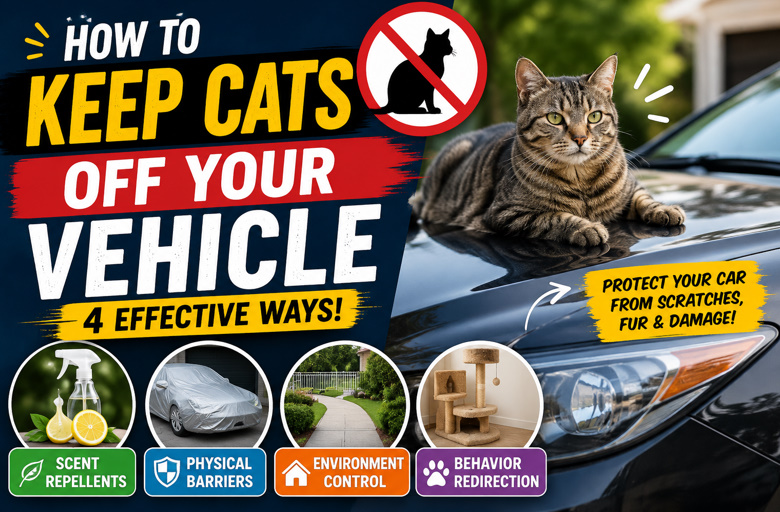
Keeping cats off your vehicle is a common problem for car owners, especially in areas with stray or outdoor cats. Cats often climb cars for warmth, shelter, or territory marking. In this guide, you will learn effective cat deterrent methods, car protection tips, and behavior control strategies to keep your vehicle safe, clean, and scratch-free using simple, practical solutions.
Use Cat Deterrents Around Your Vehicle (Sprays, Sounds, and Motion)
Keeping cats off your vehicle starts with smart cat deterrents that target their natural curiosity. Many cats climb cars for warmth or territory marking. Using motion-activated devices, citrus sprays, and ultrasonic repellents helps reduce unwanted feline visits. These methods support how do you keep cats off your vehicle protection while keeping outdoor cats safe without harm.
From my experience as a cat owner, I noticed neighborhood cats often returned to my parked car at night. After using motion sprinklers and natural repellents, the behavior reduced significantly. Consistency is key in cat behavior management. Over time, cats learn that your vehicle is not a comfortable resting place.
- 🚗 Motion sensors scare cats away instantly
- 🍋 Citrus spray is a natural cat repellent
- 🔊 Ultrasonic devices help with distance control
- 🌙 Use deterrents especially at night
- 🧴 Reapply sprays regularly for best results
- 🐱 Cats dislike sudden noise changes
- 🚫 Avoid harmful chemicals for safety
- 🌿 Natural solutions are eco-friendly
- 🧠 Cats learn patterns quickly
- 🛑 Consistency improves long-term results
Advice: Always combine multiple deterrents for stronger cat prevention instead of relying on one method.
Create Physical Barriers to Protect Your Car
Physical barriers are one of the most effective ways to stop cats from climbing or scratching your vehicle. Using car covers, anti-climb mats, or parking in closed garages reduces access. These solutions improve vehicle protection and prevent unwanted paw marks, fur buildup, and scratches caused by curious outdoor cats.
I once parked under a tree where cats frequently jumped onto my car hood. After switching to a full car cover, the issue almost disappeared overnight. It showed me that simple cat-proofing solutions often work better than complicated repellents. Physical prevention is the most reliable long-term strategy for car safety.
- 🚙 Use a full car cover daily
- 🧱 Park in a closed garage if possible
- 🪵 Avoid parking under trees
- 🧺 Anti-climb mats discourage jumping
- 🧼 Keep car surface clean and dry
- 🐾 Remove cat-attracting warmth spots
- 🚫 Block easy access points
- 🏠 Covered parking reduces cat visits
- 🔒 Physical barriers give instant protection
- 📉 Less access = fewer scratches
Advice: Invest in a durable car cover—it’s the most practical long-term solution.
Use Natural Smells and Scent-Based Cat Repellents
Cats rely heavily on scent, so smell-based deterrents are powerful for keeping them off vehicles. Citrus peels, vinegar sprays, and commercial cat-repelling scents disrupt their comfort zone. These solutions are widely used in cat deterrent strategies and help maintain a clean, scratch-free vehicle without harming animals or the environment.
As a cat owner, I noticed my cat avoided certain areas where citrus peels were placed. This taught me how sensitive cats are to smell changes. Applying scent barriers around my parked car significantly reduced visits. Over time, even stray cats stopped treating the area as a territory.
- 🍊 Citrus scents repel most cats
- 🧴 Vinegar spray works as a barrier
- 🌿 Essential oils (safe ones) help
- 🐱 Strong smells discourage territory marking
- 🚗 Spray around tires and wheels
- 🧪 Reapply after rain or washing
- 🚫 Avoid toxic substances for safety
- 🌼 Herbal repellents are eco-friendly
- 🧠 Cats remember unpleasant smells
- 📉 Scent control reduces car visits
Advice: Rotate scents regularly so cats don’t get used to them.
Train Cats and Redirect Their Behavior Away from Vehicles
Training cats and redirecting their behavior is a long-term solution for vehicle protection. Cats often climb cars due to boredom or curiosity. Providing scratching posts, climbing trees, and toys helps shift their attention. This approach is widely recommended in feline behavior management and improves overall outdoor cat control.
In my experience, my own cat used to jump on parked cars regularly. After introducing a tall cat tree and play routine, the behavior decreased noticeably. It showed me that enrichment is more effective than punishment. When cats have alternatives, they naturally avoid damaging or climbing vehicles.
- 🐾 Provide scratching posts nearby
- 🪵 Install climbing trees for cats
- 🎾 Use toys to reduce boredom
- ⏱️ Daily play reduces curiosity behavior
- 🏡 Create a dedicated cat zone
- 🚗 Redirect attention away from cars
- 🧠 Positive reinforcement works best
- 🚫 Avoid punishment-based methods
- 🐱 Well-stimulated cats ignore vehicles
- 📈 Training improves long-term habits
Advice: Focus on behavior redirection rather than trying to punish natural cat instincts.
Use Strong Scent-Based Cat Repellents Around Your Car
Cats often climb vehicles due to warmth and territorial scent marking. Using scent-based cat repellents like citrus peels, vinegar sprays, and commercial deterrent sprays can help protect your car. These natural cat deterrents interfere with feline behavior patterns and reduce unwanted scratching or jumping on your vehicle.
As a cat owner, I noticed stray cats repeatedly sitting on my car bonnet at night. After applying citrus-based spray around tires and doors, their visits reduced significantly. It taught me that scent control is a powerful part of car protection and long-term cat behavior management.
- 🍋 Citrus scents naturally repel cats
- 🧴 Vinegar spray creates a strong barrier
- 🌿 Herbal cat repellents are eco-friendly
- 🚗 Apply around tires and bumpers
- 🐱 Cats avoid strong unfamiliar smells
- 🌙 Night application works best
- 🔁 Reapply after rain or washing
- 🚫 Avoid harmful chemical sprays
- 🧠 Cats remember unpleasant scents
- 📉 Reduces repeated cat visits
Advice: Always rotate scents to prevent cats from adapting to a single smell.
Protect Your Vehicle with Physical Barriers
Physical barriers are one of the most reliable ways to stop cats from damaging or resting on your car. Using a high-quality car cover, parking in a closed garage, or avoiding tree shade reduces access. These car protection methods help prevent scratches and fur buildup caused by feline activity.
I once parked under a tree where cats constantly jumped onto my roof. After switching to a waterproof car cover, the problem disappeared quickly. This experience showed me that simple vehicle protection tools often work better than complex deterrents when dealing with persistent stray cats.
- 🚙 Use a durable car cover daily
- 🏠 Park in a garage when possible
- 🌳 Avoid parking under trees
- 🧱 Block easy jumping access
- 🧼 Keep vehicle surface clean
- 🐾 Remove warm resting spots
- 🔒 Covers stop scratching damage
- 🚫 Reduces stray cat attraction
- 📦 Portable covers are convenient
- 📉 Physical barriers give instant results
Advice: A quality car cover is the most effective long-term investment for protecting your vehicle.
Modify the Environment to Reduce Cat Attraction
Cats are naturally drawn to quiet, warm, and sheltered areas, which often includes parked vehicles. Changing the environment around your parking space helps reduce this attraction. Removing food sources, reducing shelter spots, and keeping the area clean improves cat deterrent effectiveness and supports better feline behavior control.
From my experience, stray cats used to gather near my driveway because neighbors left food outside. Once we cleaned the area and reduced shelter spaces, cat activity dropped noticeably. This showed me that environmental control is just as important as sprays or barriers for long-term car protection.
- 🧹 Keep parking area clean
- 🍖 Remove outdoor food sources
- 🏚️ Eliminate hiding spots
- 💡 Improve outdoor lighting
- 🚗 Park in open visible areas
- 🐱 Reduce warm sheltered zones
- 🌿 Maintain a tidy environment
- 🚫 Avoid attracting stray cats
- 🧠 Cats follow habit patterns
- 📉 Cleaner space = fewer visits
Advice: Environmental cleanup is a silent but powerful cat deterrent strategy
Redirect Cat Behavior with Training and Alternatives
Training cats and redirecting their behavior helps reduce unwanted vehicle climbing. Providing scratching posts, climbing towers, and play activities shifts their focus away from cars. This feline behavior management method is especially useful for pet owners dealing with indoor or outdoor cats regularly interacting with parked vehicles.
I experienced this with my own cat, who used to jump on my car regularly. After introducing a tall scratching post and daily play routine, the behavior slowly disappeared. It proved that behavior redirection is more effective than punishment when dealing with natural cat curiosity.
- 🪵 Provide scratching posts nearby
- 🎾 Increase daily playtime
- 🧗 Offer climbing structures
- 🏡 Create a cat-friendly zone
- 🧠 Use positive reinforcement
- 🚗 Redirect attention from cars
- 🚫 Avoid punishment methods
- 🐱 Reduce boredom-driven behavior
- ⏱️ Consistent training is key
- 📈 Better habits form over time
Advice: Always redirect behavior instead of trying to stop natural feline instincts completely.
Conclusion
Preventing cats from climbing your vehicle requires a mix of scent deterrents, physical barriers, environmental changes, and behavior redirection. By using consistent cat repellent methods and maintaining a clean parking area, you can protect your car long-term. With the right approach, you can stop unwanted feline visits and keep your vehicle safe from scratches, fur, and damage effectively.