
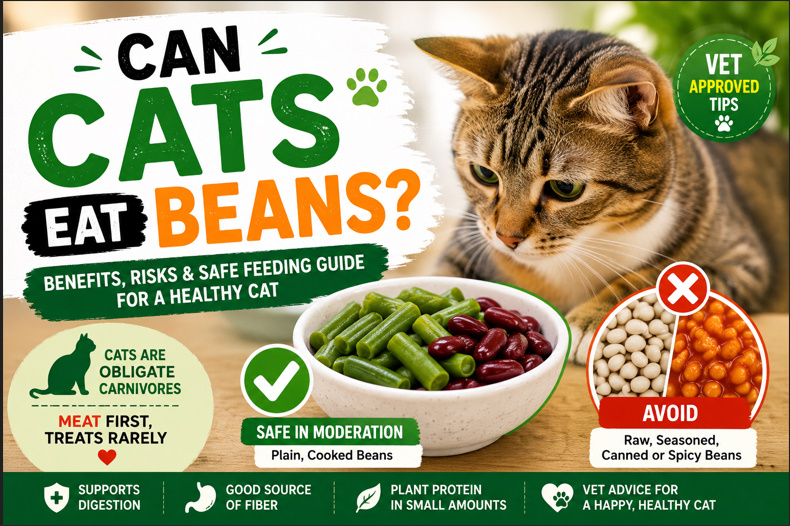
Can cats eat beans? Many cat owners ask this question when sharing healthy foods with their feline companions. While some cooked beans are safe in moderation, they are not an essential part of a cat’s diet. This guide explains the benefits, risks, safe serving methods, and veterinary recommendations to help you make informed decisions for your cat’s long-term health.
Can Cats Eat Beans Safely? Everything Every Cat Owner Should Know
Cats are obligate carnivores, meaning their digestive system is designed to process animal-based proteins rather than plant foods. While some cooked beans are not toxic to cats, they should only be offered occasionally and in very small amounts because they provide little nutritional value.
As both a cat food specialist and veterinary doctor, I always advise pet owners to focus on high-quality meat instead of plant-based foods. During my years of practice, I have seen several cats experience digestive upset after eating seasoned or canned beans prepared for human consumption.
Quick Facts 🐱
- 🫘 Cooked beans are generally non-toxic.
- ❌ Raw beans should never be fed.
- 🍖 Cats need meat more than vegetables.
- ⚠️ Beans are not a complete cat food.
- 🥄 Serve only tiny portions.
- 🚫 Avoid canned beans with salt.
- 🌶️ Never add garlic or onions.
- 💧 Fresh water should always be available.
- 🩺 Watch for vomiting or diarrhea.
- ❤️ Meat should remain your cat’s main diet.
Are Beans Healthy for Cats? Nutritional Benefits and Possible Risks
Beans contain fiber, protein, iron, potassium, magnesium, and antioxidants. Although these nutrients are healthy for humans, cats absorb nutrition differently because their bodies rely heavily on animal protein, taurine, and essential amino acids found in meat.
As a cat owner, I once offered my healthy adult cat a teaspoon of plain boiled green beans. She tolerated them well but showed little interest. In my veterinary clinic, most digestive problems occurred after cats ate heavily seasoned baked beans or spicy bean dishes.
Benefits & Risks 🐾
- 🌱 Beans contain dietary fiber.
- 💪 Plant protein isn’t enough for cats.
- 🩺 Too much fiber may upset digestion.
- 🍽️ Plain cooked beans are safest.
- 🚫 Avoid fried beans.
- 🧂 Salt is dangerous in large amounts.
- 🌶️ Spices can irritate cats.
- 🐈 Some cats simply dislike beans.
- ⚖️ Moderation is essential.
- ❤️ Meat remains the healthiest option.
Which Types of Beans Can Cats Eat?
Not every bean is equally suitable for cats. Plain boiled green beans, black beans, kidney beans, pinto beans, chickpeas, and lima beans may be safe in tiny quantities when fully cooked. However, preparation is extremely important.
From my veterinary experience, I have treated cats that became ill after eating chili beans, baked beans, and refried beans. The seasonings—not the beans themselves—were usually responsible for stomach irritation and digestive discomfort.
Safe Bean Choices 🫘
- ✅ Plain green beans.
- ✅ Boiled black beans.
- ✅ Cooked kidney beans.
- ✅ Pinto beans.
- ✅ Chickpeas.
- ❌ Refried beans.
- ❌ Baked beans.
- ❌ Chili beans.
- ❌ Raw beans.
- ❌ Garlic-seasoned beans.
Can Kittens Eat Beans?
Kittens have delicate digestive systems and require nutrient-rich diets specifically formulated for growth. Their bodies need high-quality animal protein, healthy fats, taurine, calcium, and vitamins that beans cannot adequately provide during this important developmental stage.
As a veterinarian, I never recommend introducing beans into a kitten’s diet unless advised for a specific medical reason. During my practice, kittens with digestive sensitivity recovered much faster after returning to balanced kitten food instead of human snacks.
Kitten Feeding Tips 🍼
- 🐱 Feed kitten-specific food.
- 🍗 Choose high animal protein.
- 🚫 Avoid human snacks.
- 🫘 Skip beans for young kittens.
- 💧 Keep fresh water available.
- 🩺 Monitor digestion.
- ❤️ Feed smaller meals.
- 📅 Maintain feeding schedules.
- ⚖️ Support healthy growth.
- 👨⚕️ Ask your vet first.
How Many Beans Can Cats Eat?
If your cat enjoys plain cooked beans, only a teaspoon should be offered occasionally. Beans should make up less than ten percent of your cat’s occasional treats and never replace balanced commercial cat food or fresh meat.
I have met many pet owners who believed more vegetables automatically meant a healthier diet. In reality, moderation prevented digestive problems, while excessive bean consumption often resulted in bloating, gas, loose stools, or vomiting.
Feeding Guidelines 🍽️
- 🥄 One teaspoon is enough.
- 📅 Offer occasionally.
- 🍖 Prioritize meat.
- ⚖️ Practice portion control.
- 🚫 Don’t feed daily.
- 💧 Encourage hydration.
- 🩺 Watch stool consistency.
- 🐈 Every cat differs.
- ❤️ Balance is important.
- 👨⚕️ Consult your veterinarian.
Signs Your Cat Cannot Tolerate Beans
Although many cats tolerate tiny amounts of cooked beans, some develop digestive discomfort due to fiber sensitivity. Owners should monitor their cats carefully after introducing any new food, including beans, vegetables, fruits, or human leftovers.
During emergency appointments, I have treated cats experiencing vomiting after consuming heavily seasoned human meals containing beans. Removing the inappropriate food and returning to their normal diet usually resolved mild digestive problems within a short period.
Warning Signs 🚨
- 🤢 Vomiting.
- 💩 Diarrhea.
- 😿 Loss of appetite.
- 😴 Lethargy.
- 💨 Excessive gas.
- 😖 Stomach pain.
- 💧 Dehydration.
- 🐾 Restlessness.
- 🚑 Seek veterinary care.
- ❤️ Stop feeding beans immediately.
Final Verdict: Should You Feed Beans to Your Cat?
Cats can occasionally eat plain cooked beans, but they receive far greater nutritional benefits from high-quality animal protein. Beans should always remain an occasional treat rather than a regular ingredient in your cat’s feeding routine.
After years as both a veterinarian and cat owner, I recommend keeping your cat’s diet simple, balanced, and species-appropriate. Healthy commercial cat food, lean cooked meat, and fresh water consistently produce the happiest and healthiest feline patients.
Final Tips ❤️
- 🍗 Meat comes first.
- 🫘 Beans are optional.
- 🥄 Feed tiny portions.
- 🚫 Avoid seasonings.
- 💧 Fresh water matters.
- 🐱 Monitor every new food.
- 🩺 Visit your veterinarian regularly.
- ❤️ Balanced nutrition is essential.
- 🏡 Feed species-appropriate diets.
- 😺 Keep your cat healthy and happy.
Conclusion
Beans can be an occasional treat for cats when served plain, fully cooked, and in small portions. However, cats thrive on animal-based protein, making meat the most important part of their diet. Always avoid seasoned, canned, or raw beans, monitor your cat after introducing new foods, and consult your veterinarian whenever you have concerns about feline nutrition.
[…] Can Cats Eat Beans🍖? Benefits, Risks & Safe Feeding Guide for Cats […]
[…] Can Cats Eat Beans🍖? Benefits, Risks & Safe Feeding Guide for Cats […]