
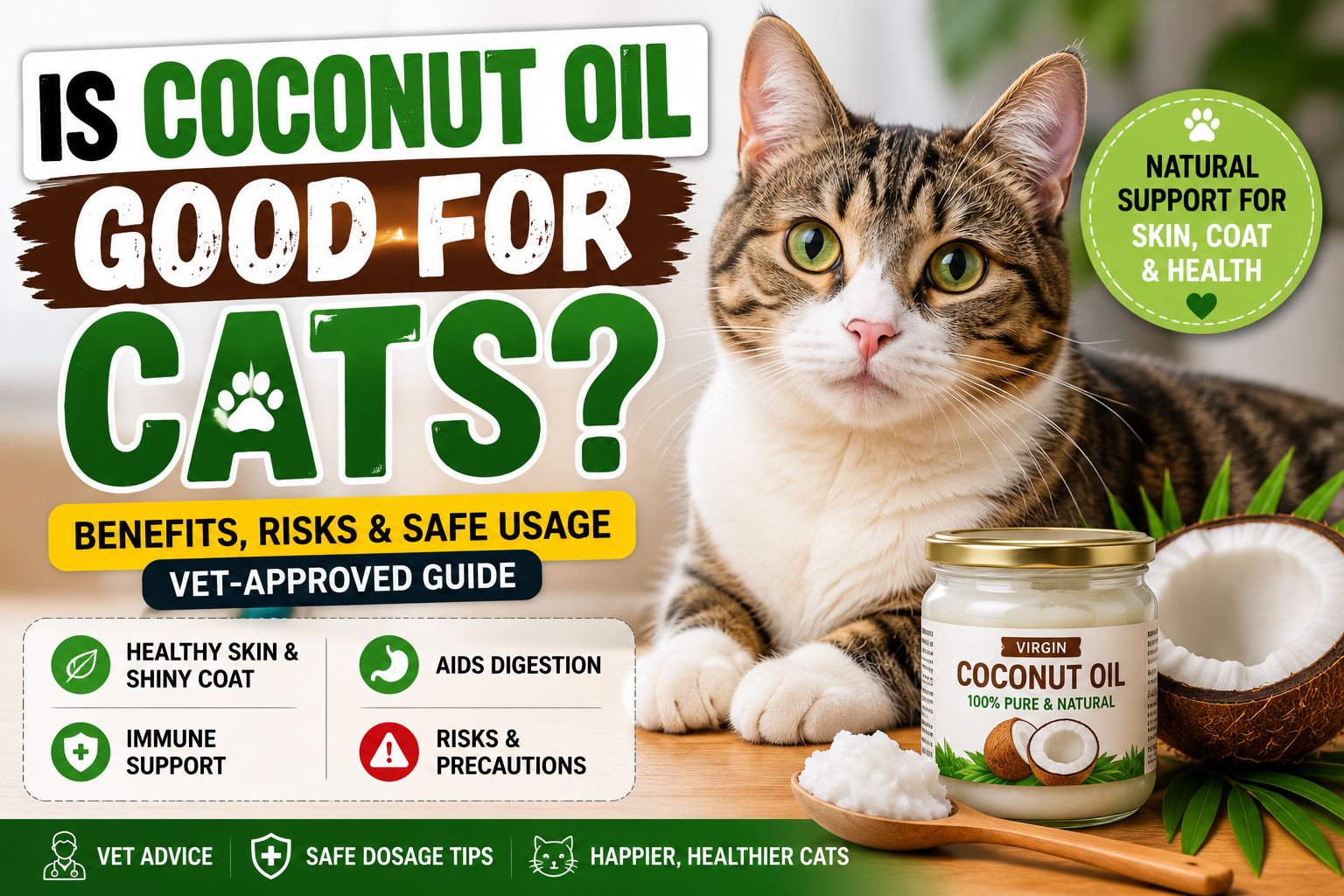
Many cat owners wonder, is coconut oil good for cats and whether it is a safe natural supplement. Coconut oil has gained popularity for supporting healthy skin, shiny coats, and overall feline wellness. However, it also has potential risks if used incorrectly. This guide explains the benefits, side effects, safe usage, and expert veterinary advice to help you make informed decisions.
Is Coconut Oil Good for Cats? Benefits Every Cat Owner Should Know 🥥🐱
Coconut oil can be beneficial for some cats when used correctly. It contains healthy medium-chain triglycerides (MCTs), including lauric acid, which may support skin health, coat shine, and overall wellness. However, every cat responds differently, so moderation and veterinary guidance are essential before adding it to your cat’s diet.
As both a cat owner and veterinary professional, I have seen cats with dry skin and dull coats improve after controlled coconut oil use. In my clinical experience, introducing only a tiny amount while monitoring digestion works best. Quality matters, so always choose organic, virgin, cold-pressed coconut oil for maximum benefits.
✅ Quick Facts 🐾
- 🥥 Coconut oil contains healthy fats.
- 🐱 May improve coat shine.
- ✨ Supports healthy skin.
- 💧 Helps reduce dryness.
- ❤️ Rich in lauric acid.
- 🌿 Use virgin coconut oil.
- ⚖️ Give only small amounts.
- 👨⚕️ Ask your veterinarian first.
- 🐈 Monitor your cat carefully.
- 😊 Every cat is unique.
👨⚕️ Veterinary & Cat Nutrition Advice:
I recommend introducing no more than ¼ teaspoon for adult cats initially. Watch for vomiting, diarrhea, or stomach upset before making coconut oil a regular supplement.
Health Benefits of Coconut Oil for Cats 🩺🐾
Many cat owners use coconut oil to relieve dry skin, flaky coats, and minor irritation. Its moisturizing properties may reduce dandruff while promoting a softer, shinier coat. Some owners also apply it topically to cracked paw pads or dry noses with positive results.
During my years treating cats, I have noticed that coconut oil works best alongside a balanced feline diet—not as a replacement for proper nutrition. Healthy protein, essential vitamins, and veterinary-approved supplements remain far more important than any single natural remedy.
✅ Benefits at a Glance 😺
- 🥥 Moisturizes dry skin.
- ✨ Makes fur shinier.
- 🐾 Softens cracked paw pads.
- 🌿 Natural skin moisturizer.
- 💪 Supports skin barrier.
- ❤️ Contains healthy fats.
- 🐱 Easy to apply.
- 👨⚕️ Veterinary approval recommended.
- ⚖️ Use moderate amounts.
- 😊 Combine with balanced nutrition. 👨⚕️ Veterinary & Cat Nutrition Advice:
Never rely solely on coconut oil for skin disease
treatment. Persistent itching, hair loss, or wounds require a complete veterinary examination to identify allergies, parasites, or infections.
Risks and Side Effects of Coconut Oil for Cats ⚠️🐈
Although coconut oil offers potential benefits, excessive amounts may cause digestive upset, weight gain, diarrhea, vomiting, or pancreatitis in sensitive cats. Since coconut oil is calorie-dense, overweight or diabetic cats require extra caution before receiving any supplemental fats.
As both a veterinarian and lifelong cat owner, I have treated cats that developed diarrhea after owners offered too much coconut oil too quickly. Starting slowly prevented problems in most cases. Careful observation is the safest approach whenever introducing new foods.
✅ Safety Tips 🐾
- ⚠️ Avoid excessive amounts.
- 💩 Watch for diarrhea.
- 🤢 Monitor vomiting.
- ⚖️ Prevent unnecessary weight gain.
- 🩺 Pancreatitis risk exists.
- 🐱 Introduce gradually.
- 🚫 Don’t force your cat.
- 👨⚕️ Consult your vet.
- 🥥 Use food-grade oil.
- ❤️ Stop if problems appear.
👨⚕️ Veterinary & Cat Nutrition Advice:
Cats with obesity, pancreatitis, liver disease, or digestive disorders should receive veterinary approval before consuming coconut oil.
How to Use Coconut Oil Safely for Cats 🥥😺
If your veterinarian approves, introduce coconut oil gradually by mixing a very small quantity into your cat’s food. It can also be gently applied to dry skin or paw pads. Always observe your cat for any allergic reactions or digestive discomfort after use.
Personally, I use coconut oil only occasionally for foster cats experiencing mild dry skin during winter months. Combined with proper hydration, premium cat food, and regular grooming, it has provided the best results while avoiding unnecessary overuse.
✅ Best Practices 🌟
- 🥄 Start with tiny amounts.
- 🐱 Mix into food carefully.
- 🥥 Apply topically if needed.
- 🌿 Choose organic virgin oil.
- 💧 Keep your cat hydrated.
- 🪮 Groom regularly.
- 👀 Monitor skin condition.
- ❤️ Feed balanced nutrition.
- 👨⚕️ Follow veterinary advice.
- 😊 Use only when necessary.
👨⚕️ Veterinary & Cat Nutrition Advice:
For long-term skin or digestive problems, diagnose the underlying cause instead of depending on coconut oil. Proper nutrition, parasite control, hydration, and regular veterinary checkups provide the greatest long-term health benefits for cats.
Is Coconut Oil Good for Cats? Understanding the Basics 🥥🐾
Coconut oil is a natural fat extracted from mature coconuts and has become popular among pet owners looking for holistic cat care solutions. Many people ask whether coconut oil is safe for cats and if it supports feline health. When used in moderation, high-quality virgin coconut oil may provide certain benefits.
As a cat owner and veterinary practitioner, I have introduced coconut oil to healthy adult cats experiencing dry skin and dull coats. Some cats showed visible improvements within a few weeks, while others experienced mild digestive upset. This experience reminds me that every cat has unique nutritional needs and should be monitored carefully.
✅ Quick Facts About Coconut Oil 🐱
- 🥥 Coconut oil contains medium-chain triglycerides (MCTs).
- 🐾 It may improve skin hydration.
- ✨ It can support a shinier coat.
- 💧 Some cats tolerate it well.
- ❤️ Lauric acid has natural properties.
- 🐈 Always introduce slowly.
- 🌿 Choose organic virgin coconut oil.
- ⚖️ Feed only small portions.
- 👀 Monitor your cat’s reaction.
- 👨⚕️ Consult your veterinarian first.
👨⚕️ Veterinary & Cat Nutrition Advice
As a feline nutrition specialist, I recommend treating coconut oil as an occasional supplement rather than a daily necessity. A balanced, protein-rich cat diet remains the foundation of excellent feline health.
Health Benefits of Coconut Oil for Cats 🌿😺
Many cat owners use coconut oil to moisturize dry skin, reduce dandruff, and improve coat condition. The healthy fatty acids found in coconut oil may help maintain skin elasticity while supporting natural grooming. Some owners also apply it topically to dry paw pads and minor skin irritation.
During my years working with rescue cats, I noticed that older cats with flaky skin often benefited from topical coconut oil alongside improved nutrition. However, the best results always came from combining quality cat food, hydration, parasite prevention, and regular veterinary care instead of relying on coconut oil alone.
✅ Potential Benefits 🐾
- ✨ Promotes a glossy coat.
- 🥥 Moisturizes dry skin.
- 🐱 Helps reduce dandruff.
- 💧 Supports skin hydration.
- 🦴 Provides healthy dietary fats.
- ❤️ Contains natural lauric acid.
- 🌿 Can soothe dry paw pads.
- 🧴 Useful for topical application.
- 🐈 Supports overall coat condition.
- 😊 Works best with balanced nutrition.
👨⚕️ Veterinary & Cat Nutrition Advice
I always advise cat owners to focus on complete feline nutrition first. Coconut oil can be supportive, but it should never replace high-quality cat food rich in animal protein, taurine, vitamins, and essential minerals.
Risks and Side Effects of Coconut Oil for Cats ⚠️🐈
Although coconut oil has potential advantages, excessive amounts can lead to diarrhea, vomiting, stomach upset, unnecessary weight gain, or even pancreatitis in sensitive cats. Because it is calorie-dense, overweight cats and those with digestive disorders require extra caution before consuming supplemental fats.
As both a veterinarian and lifelong cat owner, I once treated a cat that developed diarrhea after its owner added several teaspoons of coconut oil daily. After discontinuing the supplement and providing supportive care, the cat recovered completely. Moderation truly makes a significant difference.
✅ Safety Tips 🩺
- ⚠️ Avoid overfeeding coconut oil.
- 💩 Watch for diarrhea.
- 🤢 Monitor vomiting carefully.
- ⚖️ Prevent unnecessary weight gain.
- 🐱 Introduce gradually.
- 👀 Observe behavioral changes.
- 🚫 Stop if digestive issues occur.
- ❤️ Use food-grade coconut oil.
- 🥄 Feed tiny portions only.
- 👨⚕️ Seek veterinary advice when unsure.
👨⚕️ Veterinary & Cat Nutrition Advice
Cats suffering from obesity, pancreatitis, liver disease, inflammatory bowel disease, or chronic digestive problems should only receive coconut oil after a complete veterinary examination and personalized dietary recommendation.
How to Use Coconut Oil Safely for Cats 🥥❤️
If your veterinarian approves, begin by adding only a tiny amount of virgin coconut oil to your cat’s food or applying a thin layer to dry skin. Increase only if your cat tolerates it well. Observe appetite, stool quality, energy level, and overall health after each use.
From my personal experience fostering dozens of rescued cats, coconut oil worked best for occasional skin dryness during colder months. It never replaced proper grooming, premium cat food, hydration, or routine veterinary checkups. Responsible use consistently produced the safest and most satisfying outcomes.
✅ Best Practices 🐾
- 🥄 Start with very small amounts.
- 🥥 Use organic virgin coconut oil.
- 🐱 Mix gently into food.
- 🌿 Apply lightly on dry skin.
- 👀 Watch for allergic reactions.
- 💧 Keep your cat hydrated.
- 🪮 Groom regularly.
- ❤️ Feed premium cat food.
- 🩺 Schedule routine vet visits.
- 😊 Use only when needed.
👨⚕️ Veterinary & Cat Nutrition Advice
For lasting feline wellness, prioritize species-appropriate nutrition, hydration, parasite control, exercise, dental care, and preventive veterinary checkups. Coconut oil should remain a complementary option—not the primary solution—for maintaining your cat’s skin and coat health.
Conclusion
Coconut oil can be a helpful addition to your cat’s care routine when used in moderation and with veterinary approval. While it may improve skin health, coat quality, and hydration, it should never replace a balanced, protein-rich diet. Always introduce coconut oil gradually, monitor your cat for adverse reactions, and consult your veterinarian for personalized nutritional guidance.