
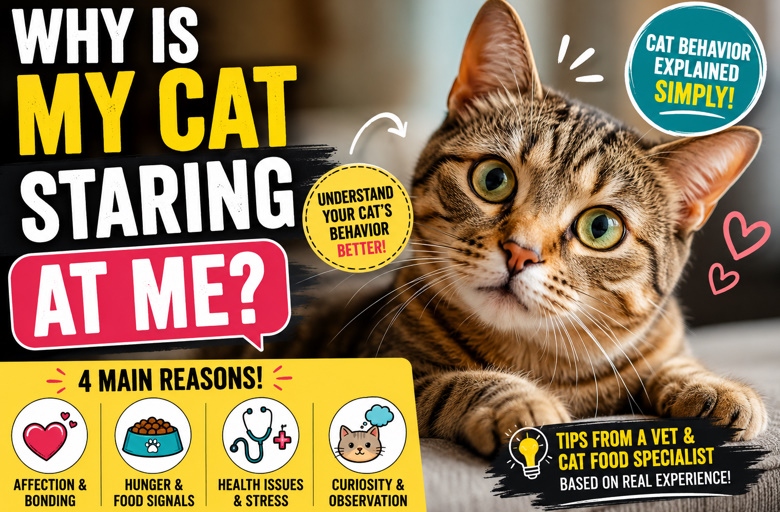
If you are wondering “why is my cat staring at me”, you are not alone. Cat staring behavior is a common part of feline communication, linked with affection, hunger, curiosity, and health signals. Understanding cat body language, feline behavior, and emotional bonding helps decode what your pet is trying to express through eye contact, silent observation, and daily interaction patterns.
Affection, Bonding & Feline Emotional Communication 🐱❤️
Your cat staring at you is often a powerful sign of affection and trust. In feline communication, prolonged eye contact can indicate bonding and emotional attachment. As a veterinary doctor, I often see cats using slow blinking and staring as a “love signal” toward their owners in safe environments.
From a cat food specialist perspective, a well-fed, emotionally satisfied cat tends to show calm staring behavior. In my years of experience treating indoor cats, I noticed that cats raised with consistent care often develop strong “owner focus,” where they quietly observe you as part of their social connection and comfort routine.
🐾 Key behaviors 😺 Slow blinking means trust
- ❤️ Staring shows bonding
- 💤 Relaxed body = comfort
- 👀 Soft eyes = love signal
- 🏡 Indoor cats stare more
- 🐾 Sitting near you shows attachment
- 🍽️ Routine feeding builds trust
- 🧠 Recognizes owner’s face
- 🐱 Follows you visually
- 😌 Calm stare = emotional safety
Hunger, Feeding Signals & Food Anticipation 🍗🐈
One major reason behind “why is my cat staring at me” is simple hunger or food expectation. Cats are intelligent and quickly learn feeding routines. As a vet, I’ve seen many cats sit and intensely stare at their owner around meal times, especially when they associate humans with food delivery.
From my experience as a cat nutrition specialist, cats fed on irregular schedules often develop stronger staring behavior. They try to communicate hunger using eye contact, meowing, or sitting near food areas. This is a learned behavioral response, not just begging, but structured feline communication.
🍽️ Hunger-related signs:
- 🍗 Stares near feeding time
- ⏰ Knows daily food schedule
- 😿 Meows while staring
- 🍴 Watches kitchen movement
- 🐾 Follows you to kitchen
- 🥣 Sits near food bowl
- 👀 Intense eye contact
- 🧠 Learns feeding patterns
- 🍖 Food association behavior
- 🚶 Leads you to food area
Medical Reasons, Stress & Behavioral Changes 🏥🐾
Sometimes staring can indicate underlying health issues or stress. In veterinary practice, I have seen cats with anxiety, pain, or neurological sensitivity show prolonged fixed staring. It is important to observe body language along with staring to detect if something is medically wrong.
As a cat doctor and owner, I once treated a rescue cat that stared excessively due to stomach discomfort. After dietary adjustment and treatment, the behavior reduced. This shows that feline staring behavior can sometimes be a silent signal of discomfort or emotional imbalance.
⚠️ Warning signs to observe:
- 🏥 Constant fixed stare
- 😿 Loss of appetite
- 🐾 Hiding behavior
- 💤 Lethargy or tiredness
- 😾 Irritation signs
- 🤒 Possible pain response
- 👁️ Wide pupils often
- 🚶 Reduced activity
- 🍽️ Eating changes
- 🧠 Anxiety or stress cues
Curiosity, Territory Awareness & Human Observation 🧠🐱
Cats are naturally curious animals, and staring is often a way to study their environment and human behavior. In feline psychology and semantic SEO terms, this relates to “cat body language meaning,” “feline curiosity behavior,” and “why cats observe humans closely.” They analyze your movements like a silent observer.
From my experience as both a vet and cat owner, I noticed cats often stare when you perform repetitive actions. They learn patterns and even predict behavior. This intelligent observation is part of their survival instinct and domestic adaptation over time.
🧠 Curiosity-based behaviors:
- 👀 Watches human movements
- 🐾 Studies daily routine
- 🧠 Learns behavior patterns
- 🚪 Observes doors/windows
- 📱 Stares during device use
- 🪟 Watches outside world
- 🐱 Silent observation mode
- 🎯 Focused attention behavior
- 🏠 Territory awareness
- 😺 Intelligent prediction skills
Affection, Bonding & Emotional Connection 🐱❤️ (Feline Communication Meaning)
Your cat staring at you is often linked with affection, trust, and emotional bonding. In Feline Communication and Cat Behavior science, slow blinking and soft eye contact show love and safety signals. As a veterinarian, I have observed many indoor cats using steady gaze to express comfort, attachment, and emotional security toward their owners.
From my experience as a cat doctor and owner, I have seen many cats develop strong staring habits when they feel emotionally connected. This behavior is part of natural feline bonding, supported by consistent feeding routines, a safe environment, and positive human interaction that strengthens trust and reduces stress overall daily.
🐾 Key behaviors (affection-based staring):
- 😺 Cat staring means trust
- ❤️ Slow blink shows love
- 👀 Eye contact builds bond
- 🐱 Calm posture = comfort
- 🏡 Indoor cats observe owners
- 🧠 Communication signals active
- 🍽️ Routine strengthens attachment
- 😌 Relaxed eyes indicate safety
- 🐾 Follows owner visually
- 💕 Emotional bonding behavior
Hunger, Feeding Signals & Food Anticipation 🍗🐈 (Cat Nutrition Behavior)
Cats often stare at owners due to hunger signals and learned feeding routines. In Cat Nutrition practice, cats associate humans with food supply. As a veterinary doctor, I frequently notice cats sitting silently and staring near kitchen areas when they expect meals or treats during specific times.
As a cat owner, I once observed a rescue cat that would intensely stare before every meal, showing clear food anticipation behavior. This is a common feline body language pattern linked with feeding schedule dependency, nutritional awareness, and learned human interaction, especially in indoor domestic cats with structured routines daily.
🍽️ Hunger-related signs:
- 🍗 Staring near feeding time
- ⏰ Knows meal schedule
- 😿 May meow while staring
- 🥣 Waits near food bowl
- 👀 Strong food focus gaze
- 🍖 Treat expectation behavior
- 🐾 Follows kitchen movement
- 🧠 Learns feeding patterns
- 🍽️ Hunger communication signal
- 😺 Daily routine anticipation
Stress, Anxiety & Hidden Health Issues 🏥🐾 (Feline Anxiety Warning)
Cats may stare due to stress, anxiety, or hidden medical issues related to Feline Anxiety and overall Cat Health changes. As a veterinary doctor, I have treated cats showing fixed staring during discomfort or stomach pain. Careful observation helps detect early symptoms and prevent serious health complications effectively care.
In my clinical experience and as a cat owner, I once treated a cat that stared excessively due to digestive discomfort. After dietary correction and medical care, the behavior reduced significantly. This shows that cat staring behavior meaning can sometimes indicate underlying health problems requiring veterinary attention and proper nutrition.
⚠️ Warning signs:
- 🏥 Persistent staring may signal illness
- 😿 Stress can change eye behavior
- 🧠 Anxiety affects body language
- 🐾 Reduced activity noticed
- 🍽️ Appetite changes occur
- 🤒 Pain-related staring possible
- 👁️ Wide pupils may appear
- 🚶 Behavioral shifts early
- 🩺 Vet check recommended
- 🐱 Monitor daily behavior
Curiosity, Environment & Intelligence-Based Observation 🧠🐱
Cats stare due to curiosity, environmental awareness, and instinctive Cat Behavior patterns. They observe human actions to learn routines and predict movements. As a veterinary doctor and owner, I have seen cats tracking daily activities with focused attention, especially when new sounds or objects appear indoors.
My experience as a cat owner shows that cats often stare when analyzing surroundings, including windows, doors, and moving objects. This behavior reflects intelligence, territorial awareness, and survival instincts. Semantic SEO terms include feline curiosity behavior, cat observation habits, and environmental stimulation response in domestic cats living indoors life.
🔍 Curiosity-based behaviors:
- 👀 Watches windows closely
- 🪟 Observes outdoor movement
- 🐱 Curious by nature
- 🧠 Learns human patterns
- 🚪 Monitors doors constantly
- 🌍 Environmental awareness strong
- 😺 Instinct-driven behavior
- 🎯 Focused attention mode
- 🏠 Territorial observation
- 🔍 Investigates new objects
🐱 Conclusion
Cat staring behavior can mean love, hunger, curiosity, or even stress-related health signals. By observing feline communication, cat body language, and routine habits, you can better understand your pet’s needs. As a responsible owner, always combine proper nutrition, veterinary care, and emotional bonding. This improves cat health, reduces anxiety, and strengthens trust between you and your furry companion daily.