
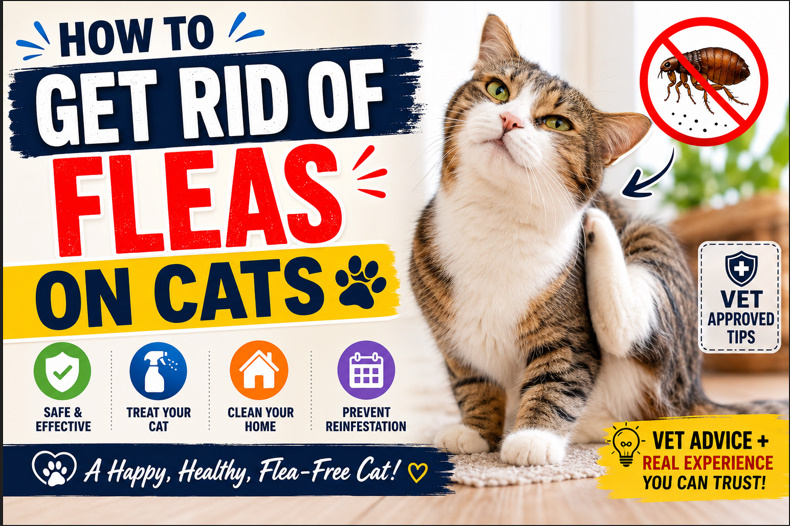
Fleas on cats are a common but serious problem that causes itching, skin irritation, and stress for pets and owners. This guide explains how to get rid of fleas on cats using veterinary advice, home care, and prevention methods. Learn effective solutions to keep your cat healthy and flea-free.
Understanding Fleas on Cats and Symptoms
Fleas on cats are tiny ectoparasites that feed on blood and cause intense itching, hair loss, and skin irritation. A flea infestation spreads quickly through your home and other pets. As a veterinary doctor, I have treated many cases where early signs were ignored, worsening the cat’s overall health condition.
Common symptoms include excessive scratching, flea dirt, restlessness, and visible tiny insects moving through fur. Cat owners often mistake these signs for allergies. From my experience as a cat owner and veterinarian, I noticed that untreated fleas lead to anemia in kittens and severe discomfort in older cats rapidly cases.
- 🐱 Constant scratching is a major warning sign
- 🪲 Flea dirt looks like black pepper in fur
- 😿 Cats become restless and irritated
- 🩸 Severe cases may lead to anemia
- 🧼 Early detection prevents infestation spread
- 🏠 Fleas can spread to other pets quickly
- 🧠 Many owners confuse fleas with allergies
- 🔍 Check behind ears and neck regularly
- ⚠️ Ignoring symptoms worsens skin infections
- 💡 Early vet check saves recovery time
Veterinary Diagnosis and Early Detection
Early veterinary diagnosis is essential for controlling flea infestation in cats. During clinical exams, we inspect skin, fur, and use flea combs to detect parasites. In my practice, I have seen many cat owners delay visits, allowing fleas to multiply rapidly and cause secondary skin infections and allergic dermatitis complications.
As a veterinarian, I often rely on comb tests and visual inspection to confirm fleas. Early detection prevents anemia and stress in cats. I remember treating a rescue kitten infested heavily because owners misunderstood itching as normal grooming behavior, delaying essential flea treatment and worsening its fragile health condition quickly.
- 🔬 Vet exams confirm flea presence accurately
- 🪮 Flea comb helps detect hidden parasites
- 🐾 Early check prevents severe infestation
- 🧪 Skin inspection is essential in diagnosis
- 😿 Delays can worsen cat health fast
- 🏥 Clinics use systematic diagnostic methods
- 🐱 Kittens are more vulnerable to fleas
- ⚠️ Misdiagnosis leads to treatment delay
- 💉 Early treatment avoids complications
- 🧠 Professional care ensures accurate results
Home Remedies to Remove Cat Fleas
Home remedies for fleas on cats include gentle methods such as flea combing, diluted apple cider vinegar sprays, and warm water baths. While not always sufficient alone, they help reduce flea numbers. As a vet, I advise using these methods carefully to avoid stressing cats or damaging sensitive skin layers.
In my years as a veterinary doctor and cat owner, I observed that natural remedies work best in mild infestations. Severe flea problems require medical treatment. Many owners tried home solutions first, but delayed care caused worsening irritation, skin wounds, and continuous scratching leading to infections and discomfort cases seen.
- 🪮 Daily flea combing removes visible fleas
- 🧴 Diluted sprays may reduce irritation
- 🚿 Warm baths help soothe skin
- 🌿 Natural remedies suit mild cases only
- ⚠️ Severe infestations need medical care
- 🐱 Avoid stressing your cat during treatment
- 🧼 Clean grooming reduces flea spread
- 🏠 Home care supports vet treatment
- 😿 Watch for skin irritation signs
- 💡 Combine natural + medical care wisely
Using Flea Treatments and Medications
Veterinary flea treatments include spot-on solutions, oral medications, and flea shampoos designed to kill parasites effectively. These treatments target all flea life stages. In my clinic experience, I found prescription medications far more effective than over-the-counter products, especially in severe flea infestations affecting multiple cats in households quickly seen cases.
As a vet, I prescribe flea control medications based on the cat’s age, weight, and health condition. Incorrect dosage can be harmful. I once treated a cat suffering from overdose of flea medicine given without guidance, which caused lethargy and vomiting, emphasizing the importance of professional veterinary supervision always care.
- 💊 Prescription meds work best for fleas
- 🧴 Spot-on treatments target flea life cycle
- 🐱 Dosage must match cat weight
- ⚠️ Overdose can be dangerous
- 🧼 Flea shampoos give quick relief
- 🏥 Vet guidance ensures safe treatment
- 🧠 Never self-medicate your cat
- 🐾 Multiple cats need combined treatment
- 💉 Oral meds act internally fast
- 🔬 Professional care prevents complications
Cleaning Home Environment and Bedding
Flea control is not only about treating cats but also cleaning the environment. Vacuuming carpets, washing bedding, and treating furniture help eliminate eggs and larvae. As a veterinarian, I have seen repeated infestations occur when owners ignored environmental cleaning, allowing fleas to survive and reinfest pets continuously in homes.
In my experience, proper household hygiene is as important as medical flea treatment for cats. I often advised owners to use flea sprays in carpets and wash pet bedding weekly. Neglecting cleaning results in a cycle of reinfestation, making treatment ineffective even after successful veterinary intervention and care always required.
- 🏠 Clean environment stops flea life cycle
- 🧹 Vacuum carpets regularly
- 🛏️ Wash pet bedding weekly
- 🪲 Eggs hide in furniture and rugs
- 🧴 Use safe flea sprays indoors
- ⚠️ Ignoring cleaning causes reinfestation
- 🐱 Treat all pet areas properly
- 🧼 Hygiene supports medical treatment
- 🔁 Break flea reproduction cycle
- 💡 Clean home = healthier cat
Preventing Flea Reinfestation Long-Term
Long-term flea prevention in cats involves regular use of preventive medications, flea collars, and maintaining a clean environment. Consistency is key to avoiding reinfestation. As a veterinary doctor, I always emphasize prevention over treatment, as I have seen chronic cases where neglect led to recurring infestations and poor cat health.
From my experience as a cat owner, I noticed that preventive flea care routines reduce stress for both pets and owners. Monthly treatments and regular grooming keep cats healthy. Many clients who followed prevention plans never experienced severe flea infestations again, showing the effectiveness of consistent veterinary guidance clearly proven.
- 🗓️ Monthly prevention is highly effective
- 🧴 Regular treatments stop reinfestation
- 🐱 Grooming keeps coat flea-free
- 🏠 Clean home reduces risk
- ⚠️ Prevention is better than cure
- 🪲 Flea collars provide added protection
- 🧠 Consistency is the key factor
- 💉 Vet-approved products work best
- 😿 Reduces stress for cats
- 💡 Long-term care ensures safety
Veterinary Care Experience and Final Advice
In my veterinary career, I have treated thousands of flea-infested cats, from mild cases to severe anemia. Each case taught me the importance of early intervention and proper flea control strategies. As both a vet and cat owner, I understand the emotional stress owners face when pets suffer from parasites.
I always recommend combining medical treatment with environmental care for complete flea eradication. Delaying treatment can worsen conditions quickly. One memorable case involved a neglected stray cat that recovered fully after intensive care, reinforcing my belief that timely veterinary attention saves lives and restores comfort to affected cats effectively always.
- 🏥 Early treatment saves cat lives
- 🐱 Fleas can cause serious anemia
- ⚠️ Delays make condition worse
- 💊 Combine meds with cleaning routine
- 🧼 Environment control is essential
- 🧠 Vet guidance ensures success
- 😿 Parasites cause emotional stress
- 🐾 Stray cats need extra care
- 🔬 Proper diagnosis is crucial
- 💡 Timely action restores health quickly
Conclusion
Getting rid of fleas on cats requires consistent treatment, home cleaning, and preventive care. Combining veterinary-approved medications with proper hygiene ensures long-term relief. Early action prevents complications like infections and anemia. With the right approach, you can protect your cat from fleas and maintain a comfortable, healthy life together.
[…] How to Get Rid of Fleas on Cats🐱: Vet-Approved Treatment […]