
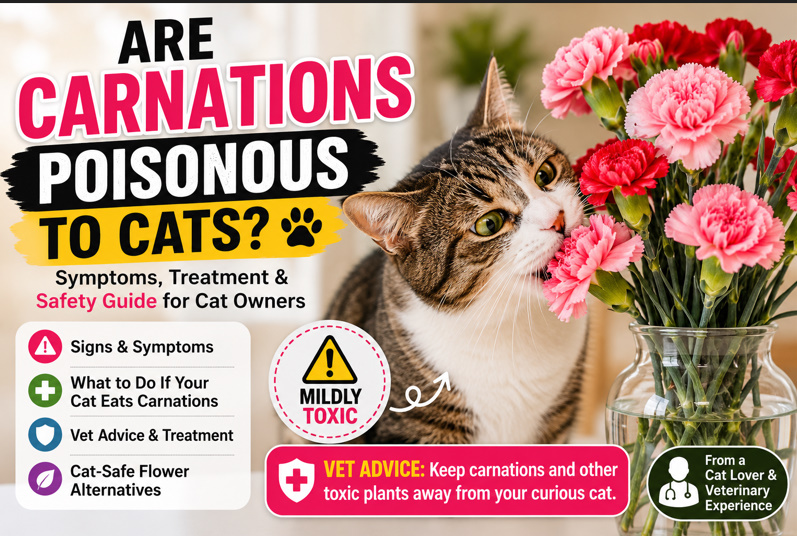
If you have fresh flowers at home, you may wonder, are carnations poisonous to cats? The answer is yes, but fortunately, their toxicity is generally mild. This guide explains symptoms, treatment, prevention, and safe alternatives while sharing real-life owner experiences and veterinary advice. You’ll also discover how to keep your curious feline safe from poisonous flowers and toxic houseplants.
## Are Carnations Poisonous to Cats?
Carnations are mildly poisonous to cats and can cause stomach upset or skin irritation if chewed. The toxins are not usually life-threatening, but they can make your cat uncomfortable. As a cat owner, I once found my curious kitten nibbling a carnation bouquet and immediately removed it before contacting my veterinarian. Veterinary advice: Keep carnations and other potentially toxic flowers away from curious cats to prevent accidental poisoning.
- 🌸 Carnations are mildly toxic to cats.
- 🐱 Chewing petals may upset the stomach.
- 🤢 Vomiting is a common symptom.
- 💩 Diarrhea may also occur.
- 🌿 Leaves and stems can cause irritation.
- 👀 Watch your cat after exposure.
- 🚫 Remove flowers from reachable places.
- 🏡 Choose cat-safe plants instead.
- 📞 Contact your veterinarian if symptoms appear.
- ❤️ Prevention is always the safest choice.
## Symptoms of Carnation Poisoning in Cats
A cat that eats carnations may develop mild poisoning symptoms within a few hours. Common signs include drooling, vomiting, diarrhea, decreased appetite, and skin irritation after contact with the plant. My older cat once sniffed a bouquet without eating it, but I still monitored him closely for unusual behavior. Veterinary advice: Seek veterinary care if symptoms persist or become severe.
- 🤮 Vomiting may occur quickly.
- 💩 Diarrhea is another warning sign.
- 😿 Loss of appetite is possible.
- 💧 Excessive drooling may develop.
- 😴 Your cat may seem tired.
- 🐾 Skin irritation can appear.
- 🌡️ Monitor symptoms carefully.
- 🚑 Visit the vet if signs worsen.
- 📝 Note what your cat consumed.
- ❤️ Early treatment supports faster recovery.
## How to Protect Your Cat from Toxic Flowers
The best way to protect your cat is by keeping toxic flowers like carnations out of your home or placing them where pets cannot reach. Replace risky bouquets with cat-safe plants to create a safer environment. Since switching to pet-friendly flowers, I no longer worry when my cats explore the house. Veterinary advice: Prevention is much easier and safer than treating accidental plant poisoning.
- 🌼 Buy cat-safe flowers only.
- 🚫 Avoid toxic houseplants.
- 🪴 Keep bouquets out of reach.
- 🐈 Supervise curious kittens.
- 🧹 Clean fallen petals quickly.
- 🌿 Research plants before buying.
- 🏠 Create a pet-safe home.
- 📚 Learn common toxic flowers.
- 👨⚕️ Schedule regular veterinary checkups.
- 💚 A safe home keeps cats healthy.
Are Carnations Safe for Cats?
Carnations are considered mildly poisonous to cats and should not be treated as pet-safe flowers. If a cat chews the petals, stems, or leaves, it may experience vomiting, diarrhea, drooling, or mild skin irritation. My own curious cat once nibbled a bouquet of carnations, and although the symptoms remained mild, I contacted my veterinarian immediately. Veterinary advice: Always keep carnations, floral arrangements, and other toxic houseplants out of your cat’s reach to prevent accidental poisoning.
- 🌸 Carnations contain mild natural toxins.
- 🐱 Curious cats often chew flowers.
- 🤢 Vomiting is a common symptom.
- 💩 Diarrhea may follow ingestion.
- 💧 Drooling can also occur.
- 🌿 Petals, stems, and leaves may all cause problems.
- 🏡 Store bouquets in cat-free areas.
- 🔍 Monitor your cat after exposure.
- 👨⚕️ Vet advice: Call your veterinarian if symptoms appear.
- ❤️ Prevention is the safest treatment.
Signs and Symptoms of Carnation Poisoning in Cats
Cats that ingest carnations usually develop mild gastrointestinal upset within a few hours. Watch for vomiting, diarrhea, loss of appetite, drooling, lethargy, or skin irritation after touching the plant. My older rescue cat once sniffed and chewed a single petal before showing mild stomach discomfort that resolved with veterinary guidance. Veterinary advice: Never ignore persistent symptoms because dehydration can develop quickly.
- 🤮 Vomiting is an early warning sign.
- 💩 Loose stools may develop.
- 😿 Appetite may decrease.
- 😴 Lethargy can occur.
- 💧 Excessive drooling is possible.
- 🐾 Skin irritation may appear.
- 🚨 Monitor your cat for 24 hours.
- 💦 Offer fresh drinking water.
- 👨⚕️ Vet advice: Seek professional care if symptoms worsen.
- ❤️ Early treatment improves recovery.
How to Keep Your Cat Safe from Toxic Flowers
Creating a cat-friendly home means avoiding toxic flowers such as carnations whenever possible. Replace risky bouquets with pet-safe plants and flowers to reduce poisoning risks. After switching to cat-safe indoor plants, I noticed my cats explored the house without putting themselves in danger. Veterinary advice: Prevention, supervision, and a pet-safe environment are the best ways to protect your feline companion.
- 🌼 Choose cat-safe flowers instead.
- 🚫 Avoid toxic ornamental plants.
- 🪴 Research every new houseplant.
- 🐈 Supervise curious kittens.
- 🧹 Remove fallen petals immediately.
- 🌿 Keep bouquets on high shelves.
- 📚 Learn common poisonous plants.
- 🏠 Create a pet-safe indoor environment.
- 👨⚕️ Vet advice: Keep your veterinarian’s number handy.
- 💚 A safe home means a healthier cat.
Are Carnations Poisonous to Cats?
Carnations (Dianthus caryophyllus) are considered mildly toxic to cats. If your cat chews the petals, stems, or leaves, it may develop vomiting, diarrhea, drooling, or skin irritation. My playful kitten once chewed a carnation bouquet, causing mild stomach upset that resolved after veterinary guidance. Veterinary advice: Remove carnations immediately and keep all toxic flowers away from curious cats.
- 🌸 Carnations are mildly poisonous to cats.
- 🐱 Curious cats often chew flowers.
- 🤢 Vomiting is a common symptom.
- 💩 Diarrhea may occur.
- 💧 Drooling can develop.
- 🌿 Leaves and petals contain irritating compounds.
- 🏡 Keep bouquets out of reach.
- ⚠️ Monitor your cat closely.
- 👨⚕️ Vet advice: Contact your veterinarian after ingestion.
- ❤️ Prevention is always the safest option.
Symptoms of Carnation Poisoning in Cats
Most cats develop mild gastrointestinal signs within several hours after eating carnations. Symptoms include vomiting, diarrhea, drooling, reduced appetite, lethargy, and skin irritation after touching the plant. One of my rescue cats became sleepy after chewing a petal, but prompt veterinary advice helped him recover quickly. Veterinary advice: Never ignore persistent vomiting because dehydration can become dangerous.
- 🤮 Vomiting is an early warning sign.
- 💩 Loose stools may appear.
- 😿 Appetite often decreases.
- 😴 Lethargy may develop.
- 💧 Excessive drooling is possible.
- 🐾 Skin irritation can occur.
- 🚨 Observe your cat for 24 hours.
- 💦 Provide fresh drinking water.
- 👨⚕️ Vet advice: Visit your veterinarian if symptoms continue.
- ❤️ Early care supports faster recovery.
How to Protect Cats from Toxic Flowers
The easiest way to prevent plant poisoning is by replacing carnations with cat-safe flowers and pet-friendly indoor plants. After switching to non-toxic plants, my cats freely explored the house without risk. Creating a pet-safe environment reduces emergency vet visits and gives every cat owner peace of mind. Veterinary advice: Prevention is far safer than treating accidental poisoning.
- 🌼 Choose cat-safe flowers.
- 🚫 Avoid toxic houseplants.
- 🪴 Research plants before buying.
- 🐈 Supervise playful kittens.
- 🧹 Pick up fallen petals quickly.
- 🌿 Display bouquets on high shelves.
- 📚 Learn common poisonous plants.
- 🏠 Create a cat-friendly home.
- 👨⚕️ Vet advice: Keep emergency vet contact information nearby.
- 💚 Safe homes keep cats healthier.
Conclusion
Carnations are not the most dangerous flowers for cats, but they are still mildly toxic and should be kept away from curious pets. Understanding the symptoms, acting quickly, and creating a pet-safe home can prevent unnecessary health problems. Choosing non-toxic flowers and following veterinary advice will help protect your beloved feline companion for many happy, healthy years.
[…] Are Carnations Poisonous to Cats🐱? Symptoms, Treatment & Safety Guide […]