
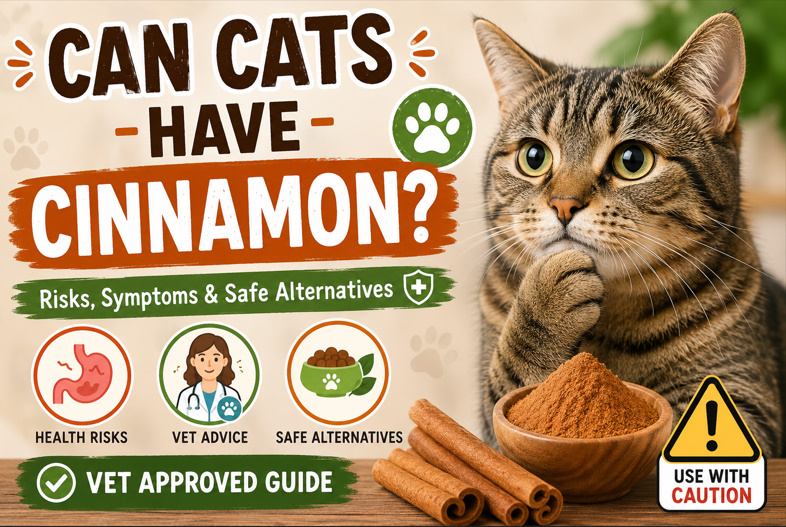
If you’ve ever wondered, can cats have cinnamon, you’re not alone. Many pet owners accidentally expose their cats to cinnamon through baked goods, spices, or essential oils. This complete guide explains whether cinnamon is safe for cats, possible health risks, symptoms of cinnamon exposure, and the best veterinarian-approved alternatives. Discover expert advice, practical safety tips, and everything you need to keep your feline friend happy, healthy, and protected.
Can Cats Have Cinnamon? Understanding the Truth 🌿🐱
Many cat owners wonder, can cats have cinnamon without risking their health? While cinnamon is not considered highly toxic to cats in tiny amounts, it can still cause digestive upset, mouth irritation, and breathing discomfort. Understanding feline nutrition helps keep your furry friend healthy and safe. 🐾
As both a cat owner and veterinary professional, I’ve met many worried pet parents after their curious cats licked cinnamon powder or cinnamon-flavored treats. Fortunately, most cases involved only mild symptoms, but prevention is always the safest approach. Always prioritize a balanced feline diet over human spices. ❤️
Quick Facts About Cinnamon and Cats 🐈✨
- 🐾 Cats do not need cinnamon in their diet.
- 🌿 Cinnamon offers no nutritional benefit for felines.
- 😺 Large amounts may irritate your cat’s mouth.
- 🍂 Cinnamon powder can trigger sneezing or coughing.
- 🚫 Avoid cinnamon essential oil completely.
- 💧 Always provide fresh water if exposure occurs.
- 👨⚕️ Veterinary Advice: Monitor your cat after accidental exposure and contact your veterinarian if unusual symptoms appear.
- 🥩 Cat Nutrition Tip: Feed species-appropriate, protein-rich food instead of human spices.
Is Cinnamon Safe for Cats? Risks Every Pet Owner Should Know ⚠️🐱
Although cinnamon is less dangerous than some household foods, it isn’t truly safe for cats. Felines process ingredients differently than humans, making even common kitchen spices capable of causing gastrointestinal irritation or allergic reactions in sensitive cats.
During my years treating cats, I examined a playful kitten that inhaled cinnamon powder while exploring the kitchen. The poor little feline developed coughing and watery eyes but recovered quickly with supportive care. That experience reminded me how easily preventable these accidents are. 🐾
Symptoms of Cinnamon Exposure in Cats 🚑🐈
If your cat accidentally consumes cinnamon, observe carefully for signs of discomfort. Most exposures are mild, but recognizing symptoms early helps prevent complications. Responsible pet ownership includes monitoring behavior after your cat eats unfamiliar foods.
I’ve cared for several indoor cats whose owners noticed vomiting after licking cinnamon-coated pastries. Thankfully, prompt observation and hydration helped them recover comfortably. These experiences taught me that quick action makes a significant difference in feline health. 💚
Warning Signs to Watch For 👀🐱
- 🤢 Vomiting or nausea.
- 💩 Mild diarrhea.
- 😿 Excessive drooling.
- 👅 Mouth irritation.
- 😮 Coughing after inhaling powder.
- 😴 Temporary tiredness.
- 📞 Veterinary Advice: Contact your vet if symptoms persist beyond a few hours.
- 🐾 Nutrition Advice: Never intentionally feed spices to your cat.
Can Cats Eat Foods That Contain Cinnamon? 🍪🐱
Many baked goods, cereals, and desserts contain cinnamon along with sugar, butter, raisins, chocolate, or xylitol. These ingredients pose much greater health risks than cinnamon alone, making human snacks unsuitable for cats.
One of my own rescue cats once stole a tiny bite of cinnamon roll. Fortunately, it was only a crumb, but that moment reminded me never to leave baked treats unattended around curious felines. Prevention truly protects our beloved companions. 🧡
Foods to Keep Away From Cats 🚫🍩
- 🍪 Cinnamon cookies.
- 🥐 Cinnamon rolls.
- 🥧 Apple pie.
- 🍰 Cakes with cinnamon.
- 🍫 Chocolate desserts.
- 🍬 Sugar-filled snacks.
- 👨⚕️ Veterinary Advice: Avoid all desserts made for humans.
- 🥩 Cat Food Specialist Tip: Offer healthy cat treats instead of bakery products.
Safe Alternatives to Cinnamon for Cats 🌿🐾
Instead of experimenting with spices, choose treats specifically designed for feline nutrition. Healthy cat snacks support digestion, immunity, and overall wellness without exposing your pet to unnecessary ingredients or digestive irritation.
As both a veterinarian and lifelong cat owner, I’ve learned that cats thrive on simple, protein-rich diets. Every healthy check-up reinforces the same lesson—safe nutrition always beats trendy human foods. Your cat depends on your food choices every single day. ❤️🐱
Better Choices for Your Cat 🥩🐈
- 🐟 Cooked salmon in moderation.
- 🍗 Plain cooked chicken.
- 🥩 Lean cooked turkey.
- 🥣 High-quality cat treats.
- 💧 Fresh clean water daily.
- 🐾 Balanced feline nutrition.
- 👨⚕️ Veterinary Advice: Introduce new foods gradually and monitor reactions.
- 🍖 Cat Nutrition Tip: Choose veterinarian-approved treats with high animal protein and essential nutrients.
What Happens If a Cat Licks Cinnamon? 👅🐱
A small lick of cinnamon usually causes only mild irritation, but every cat reacts differently. Some felines may drool, sneeze, or experience temporary stomach discomfort. Knowing what happens after exposure helps cat owners respond calmly and make informed decisions. 🐾
As a cat owner and veterinary doctor, I’ve treated curious cats that sampled cinnamon from kitchen counters. Most recovered without complications after observation and hydration. However, I always remind owners that prevention is easier than treatment when it comes to feline safety. ❤️
What to Do After Your Cat Licks Cinnamon 🐾
- 👀 Stay calm and observe your cat.
- 💧 Offer plenty of fresh water.
- 🚫 Prevent further exposure.
- 🤢 Watch for vomiting or diarrhea.
- 😺 Monitor breathing and behavior.
- 📞 Call your veterinarian if symptoms worsen.
- 👨⚕️ Veterinary Advice: Seek emergency care if breathing becomes difficult.
- 🥩 Cat Food Specialist Tip: Reward your cat with healthy feline treats instead.
Can Cinnamon Essential Oil Harm Cats? 🌿⚠️
Cinnamon essential oil is much more concentrated than ground cinnamon and poses a greater risk to cats. Exposure through skin contact, inhalation, or ingestion may lead to toxicity, irritation, or respiratory distress because cats cannot efficiently metabolize many essential oils.
During my veterinary practice, I encountered a cat exposed to a diffuser containing cinnamon oil. The cat developed watery eyes and coughing but improved after removing the source and receiving supportive care. This reinforced the importance of pet-safe home environments. 🐱
Essential Oil Safety Tips 🏡
- 🚫 Avoid cinnamon oil around cats.
- 🌬️ Do not diffuse essential oils near pets.
- 🧴 Keep oils locked away.
- 🐾 Wash paws if accidental contact occurs.
- 💨 Ensure good home ventilation.
- 📞 Contact your veterinarian immediately after exposure.
- 👨⚕️ Veterinary Advice: Essential oils require urgent attention.
- 🥩 Cat Nutrition Tip: Use only pet-safe products in your home.
Why Are Cats Attracted to Cinnamon? 🐈🌿
Most cats are not naturally attracted to cinnamon itself. Instead, they become curious about the smell of baked goods or foods containing butter, meat, or dairy. Their curiosity often leads them to investigate unfamiliar kitchen aromas.
My own rescue cat once ignored plain cinnamon powder but couldn’t resist sniffing a freshly baked cinnamon pastry. Thankfully, I removed it before any tasting occurred. Curious cats need careful supervision around human foods. 😸
Understanding Feline Curiosity 🐾
- 👃 Cats explore using their noses.
- 🍰 Baked foods attract curious pets.
- 🚫 Curiosity doesn’t mean food is safe.
- 🧹 Keep countertops clean.
- 🥧 Store baked goods securely.
- 🏠 Supervise kitchen adventures.
- 👨⚕️ Veterinary Advice: Never encourage cats to taste human desserts.
- 🥩 Cat Food Specialist Tip: Offer nutritious cat treats to satisfy curiosity.
How to Prevent Cinnamon Accidents at Home 🏡🐱
Creating a pet-safe home greatly reduces accidental exposure to cinnamon and other household hazards. Proper food storage, clean countertops, and secure spice cabinets protect curious cats while giving owners peace of mind every day.
Over the years, I’ve noticed that organized kitchens significantly reduce emergency veterinary visits. My own cats have remained safe simply because spices, desserts, and essential oils are always stored in closed cabinets beyond their reach. 💚
Prevention Tips for Cat Owners 🔒
- 🧂 Store spices in sealed containers.
- 🚫 Keep desserts out of reach.
- 🧹 Clean spills immediately.
- 🐾 Supervise curious kittens.
- 🌿 Avoid pet-toxic essential oils.
- 🏠 Secure kitchen cabinets.
- 👨⚕️ Veterinary Advice: Prevention is the best medicine.
- 🥩 Cat Food Specialist Tip: Feed balanced meals to reduce food curiosity.
Final Verdict: Can Cats Have Cinnamon? ✅🐈
The simple answer is that cats should not intentionally eat cinnamon. While tiny accidental amounts are usually not life-threatening, cinnamon provides no nutritional value and may cause digestive or respiratory irritation. A balanced feline diet remains the healthiest choice.
After years of caring for cats as both a veterinarian and pet owner, I confidently recommend avoiding cinnamon altogether. Safe, protein-rich cat food and veterinarian-approved treats are always better options for maintaining long-term feline health and happiness. ❤️🐾
Final Takeaways 📝
- ❌ Do not feed cinnamon intentionally.
- 🥩 Choose species-appropriate cat food.
- 💧 Keep fresh water available.
- 👀 Monitor accidental exposure.
- 📞 Contact your veterinarian if needed.
- 🐾 Practice safe food storage.
- 👨⚕️ Veterinary Advice: Regular health checkups keep cats healthier.
- 🥩 Cat Food Specialist Tip: High-protein, balanced diets support lifelong feline wellness.
Conclusion 🐾❤️
While a tiny accidental taste of cinnamon is usually not life-threatening, it should never become part of your cat’s regular diet. Cinnamon offers no nutritional benefits and may cause digestive or respiratory irritation. As both a cat owner and veterinary professional, I always recommend feeding high-quality, protein-rich cat food and avoiding human spices. A safe diet and regular veterinary care are the keys to lifelong feline health.